
Last updated: April 23, 2026
Sagging Ceiling in Fallbrook, CA.
A sagging ceiling means drywall or plaster has taken on enough water to lose strength. The bulge is a structural moisture emergency first and a cosmetic repair second..
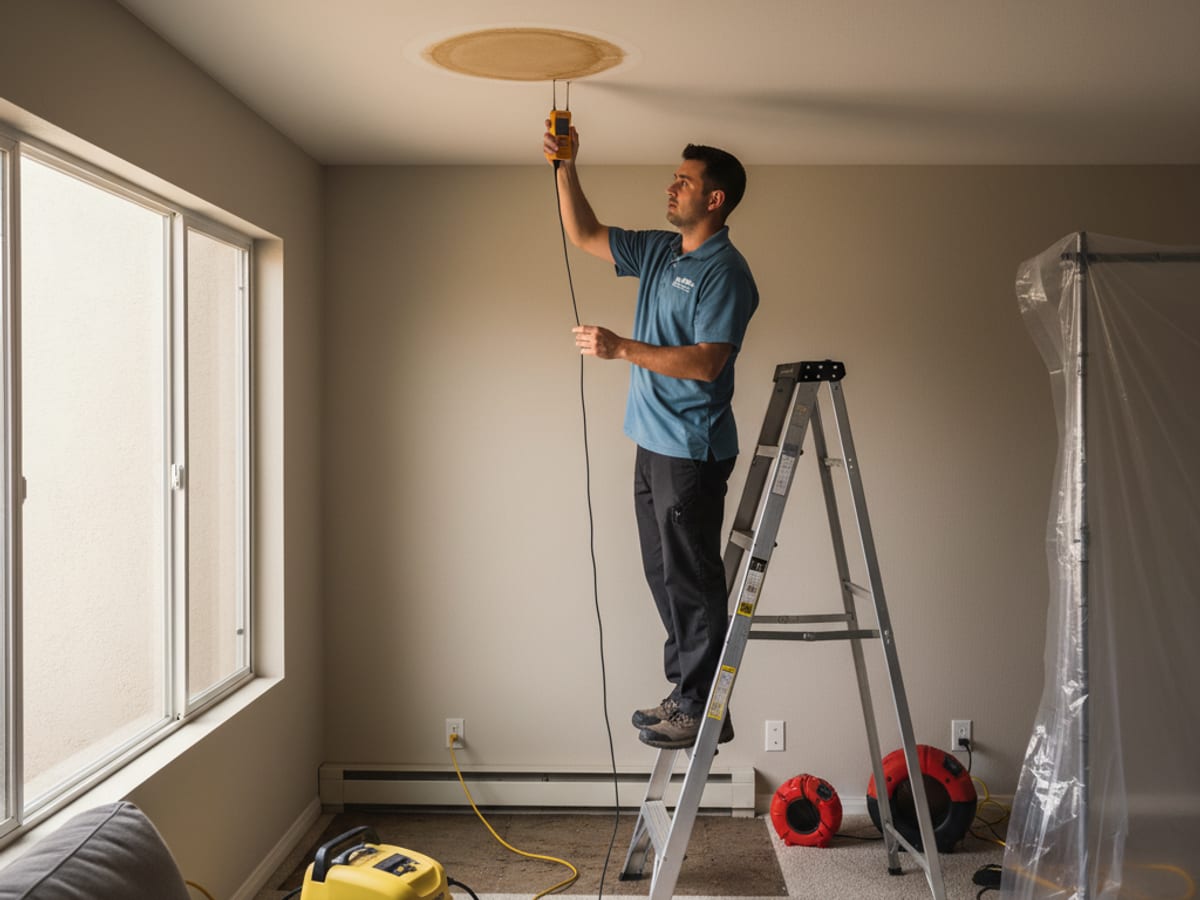
What sagging ceiling means in Fallbrook
In Fallbrook, sagging ceiling is a moisture problem first and a cosmetic issue second. Fallbrook water damage scope is shaped by the community's rural-residential character and the prevalence of well water and septic systems. That local housing mix shapes where we look first when this symptom shows up.
Why sagging ceiling shows up in Fallbrook
Sagging ceilings in Escondido, San Marcos, Vista, and Poway are emergency moisture calls. 1970s-90s tract homes with slab-on-grade construction plus appliance supply failures and slab leaks dominate create the upstairs release paths we see most, and lower ambient RH that still cannot save undried cavities adds weight when insulation stays soaked.
- Common local pattern: appliance supply failures and slab leaks dominate
- Housing context: 1970s-90s tract homes with slab-on-grade construction
- Climate factor: lower ambient RH that still cannot save undried cavities
- Neighborhoods and cities in play: Escondido, San Marcos, Vista, and Poway
- Related restoration path: ceiling water damage after moisture mapping
Fallbrook homes and what they need
For well-pump and supply-system failures producing extended interior water loss, the work involves fast extraction once we arrive, structural dry-out of the affected areas with high-CFM air movement, mold remediation when the loss ran long before discovery, and reconstruction.
Neighborhoods we cover for sagging ceiling in Fallbrook: Downtown Fallbrook, Live Oak Park area, De Luz, Pala Mesa, Rainbow Heights, Gird Valley.
Fallbrook rural-residential stock on multi-acre parcels runs heavy on well water and septic systems. Well-pump failures producing extended water loss into structures, septic-system backups during major storms, and slab leaks in the older avocado-grove ranch homes drive the local call mix.
Common causes of sagging ceiling
- Active upstairs leak still feeding the cavity
- Saturated insulation weighing down the drywall
- Failed tape joints that open before the center bulges
- Plaster keys failing on older lath ceilings
- Secondary collapse risk after the water is stopped
- Need to drain and remove wet board under controlled conditions
Ready for restoration help? See ceiling damage in Fallbrook or the Fallbrook service area page.
Fallbrook sagging ceiling questions
What usually causes sagging ceiling in Escondido homes?
In this part of the county the leading pattern is appliance supply failures and slab leaks dominate. We moisture-map first, confirm whether the source is still active, and only then open walls or remove finishes.
Is sagging ceiling an emergency in the North County Inland area?
A sagging ceiling can release suddenly. Stay out from under the bulge and shut off the water source if you know it. Locally, lower ambient RH that still cannot save undried cavities means waiting often makes the footprint larger than the first stain or puddle suggests.
What should I do about sagging ceiling in Fallbrook right now?
A sagging ceiling can release suddenly. Stay out from under the bulge and shut off the water source if you know it. In Fallbrook, we moisture-map on arrival, stop active sources when we can, and start extraction or containment the same visit on active losses. Call (858) 400-4586.
Do you handle sagging ceiling across North County Inland San Diego?
Yes. Sagging ceilings in Escondido, San Marcos, Vista, and Poway are emergency moisture calls. We serve Fallbrook and nearby North County Inland communities with the same IICRC-based process.
Where we work in Fallbrook
Get help with sagging ceiling in Fallbrook
Moisture mapping first. Mitigation when the loss is active.