
Last updated: April 23, 2026
Sagging Ceiling in Coronado, CA.
A sagging ceiling means drywall or plaster has taken on enough water to lose strength. The bulge is a structural moisture emergency first and a cosmetic repair second..
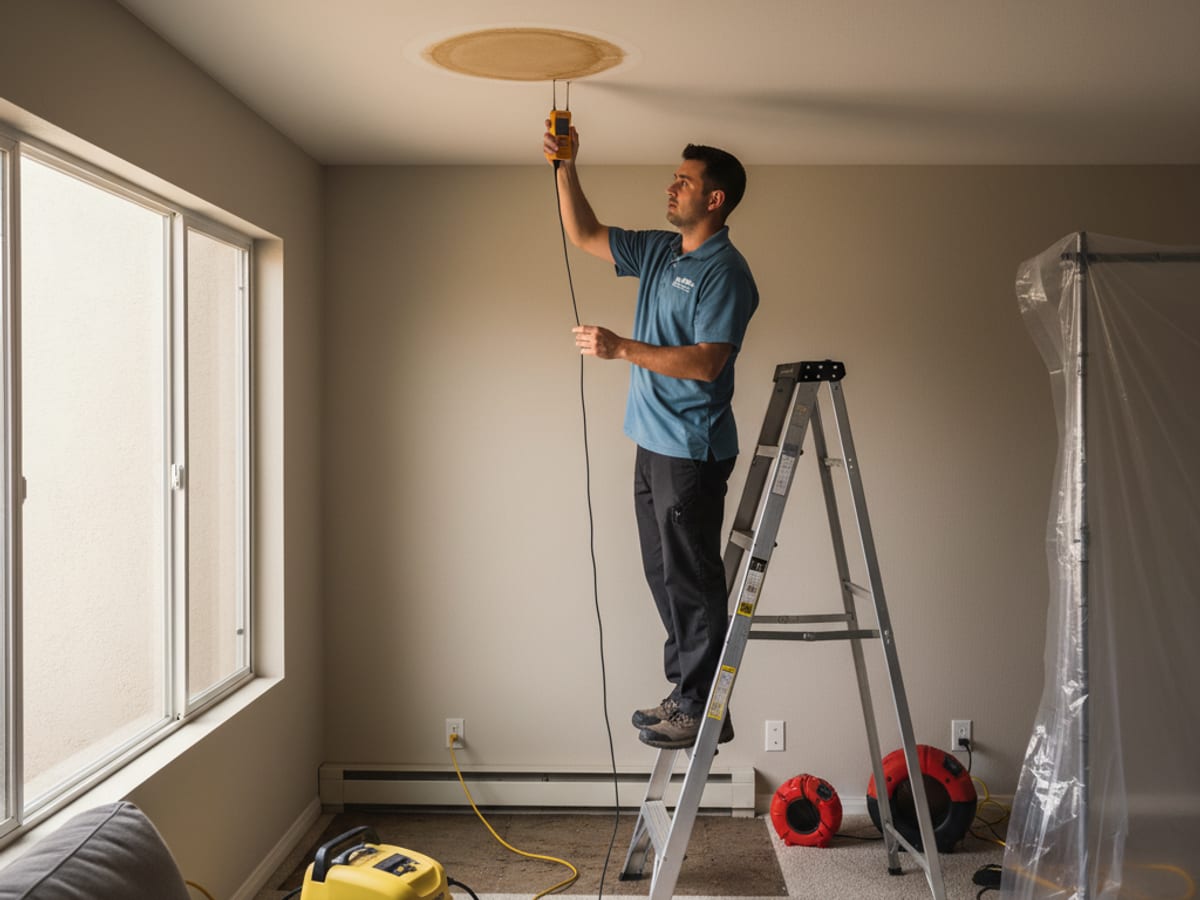
What sagging ceiling means in Coronado
In Coronado, sagging ceiling is a moisture problem first and a cosmetic issue second. Coronado water damage scope is shaped by three things: the salt-air corrosion environment, the high-end finish level of the Spreckels-era estates and newer Cays construction, and the cluster of Navy housing with its own procurement and access rules. That local housing mix shapes where we look first when this symptom shows up.
Why sagging ceiling shows up in Coronado
Sagging ceilings in Coronado, PB, OB, and Point Loma are emergency moisture calls. Older beach bungalows and salt-air housing stock plus slow leaks run longer when shutoffs seize from salt corrosion create the upstairs release paths we see most, and marine-layer humidity that keeps materials damp adds weight when insulation stays soaked.
- Common local pattern: slow leaks run longer when shutoffs seize from salt corrosion
- Housing context: older beach bungalows and salt-air housing stock
- Climate factor: marine-layer humidity that keeps materials damp
- Neighborhoods and cities in play: Coronado, PB, OB, and Point Loma
- Related restoration path: ceiling water damage after moisture mapping
Coronado homes and what they need
For the historic Spreckels-era stock around Star Park, Orange Avenue, and Ocean Boulevard, the work runs careful demolition (much of the original millwork and plaster is worth saving), structural dry-out of crawl-space framing and salt-corroded fixtures, mold remediation in the wall cavities of homes where slow leaks have been quietly colonizing for years, and reconstruction that respects the original architectural character.
Neighborhoods we cover for sagging ceiling in Coronado: The Village, Coronado Cays, Star Park area, Ocean Boulevard, Coronado Shores, North Island perimeter.
Coronado homes sit in the harshest salt-air zone in the county, with persistent marine-layer humidity that slows every dry-out and feeds hidden mold in older walls. Salt-corroded shutoffs are a chronic issue, many Coronado pipe-burst calls run longer because the house valve has seized and we work with the city on emergency meter shut-off.
Common causes of sagging ceiling
- Active upstairs leak still feeding the cavity
- Saturated insulation weighing down the drywall
- Failed tape joints that open before the center bulges
- Plaster keys failing on older lath ceilings
- Secondary collapse risk after the water is stopped
- Need to drain and remove wet board under controlled conditions
Ready for restoration help? See ceiling damage in Coronado or the Coronado service area page.
Coronado sagging ceiling questions
What usually causes sagging ceiling in Coronado homes?
In this part of the county the leading pattern is slow leaks run longer when shutoffs seize from salt corrosion. We moisture-map first, confirm whether the source is still active, and only then open walls or remove finishes.
Is sagging ceiling an emergency in the Coastal area?
A sagging ceiling can release suddenly. Stay out from under the bulge and shut off the water source if you know it. Locally, marine-layer humidity that keeps materials damp means waiting often makes the footprint larger than the first stain or puddle suggests.
What should I do about sagging ceiling in Coronado right now?
A sagging ceiling can release suddenly. Stay out from under the bulge and shut off the water source if you know it. In Coronado, we moisture-map on arrival, stop active sources when we can, and start extraction or containment the same visit on active losses. Call (858) 400-4586.
Do you handle sagging ceiling across Coastal San Diego?
Yes. Sagging ceilings in Coronado, PB, OB, and Point Loma are emergency moisture calls. We serve Coronado and nearby Coastal communities with the same IICRC-based process.
Where we work in Coronado
Get help with sagging ceiling in Coronado
Moisture mapping first. Mitigation when the loss is active.