
Last updated: April 23, 2026
Musty Smell in La Presa, CA.
A persistent musty smell after a leak is often the nose finding what the eye cannot. Wall cavities, pad, crawlspaces, and wet insulation hold odor even when finished surfaces look fine..
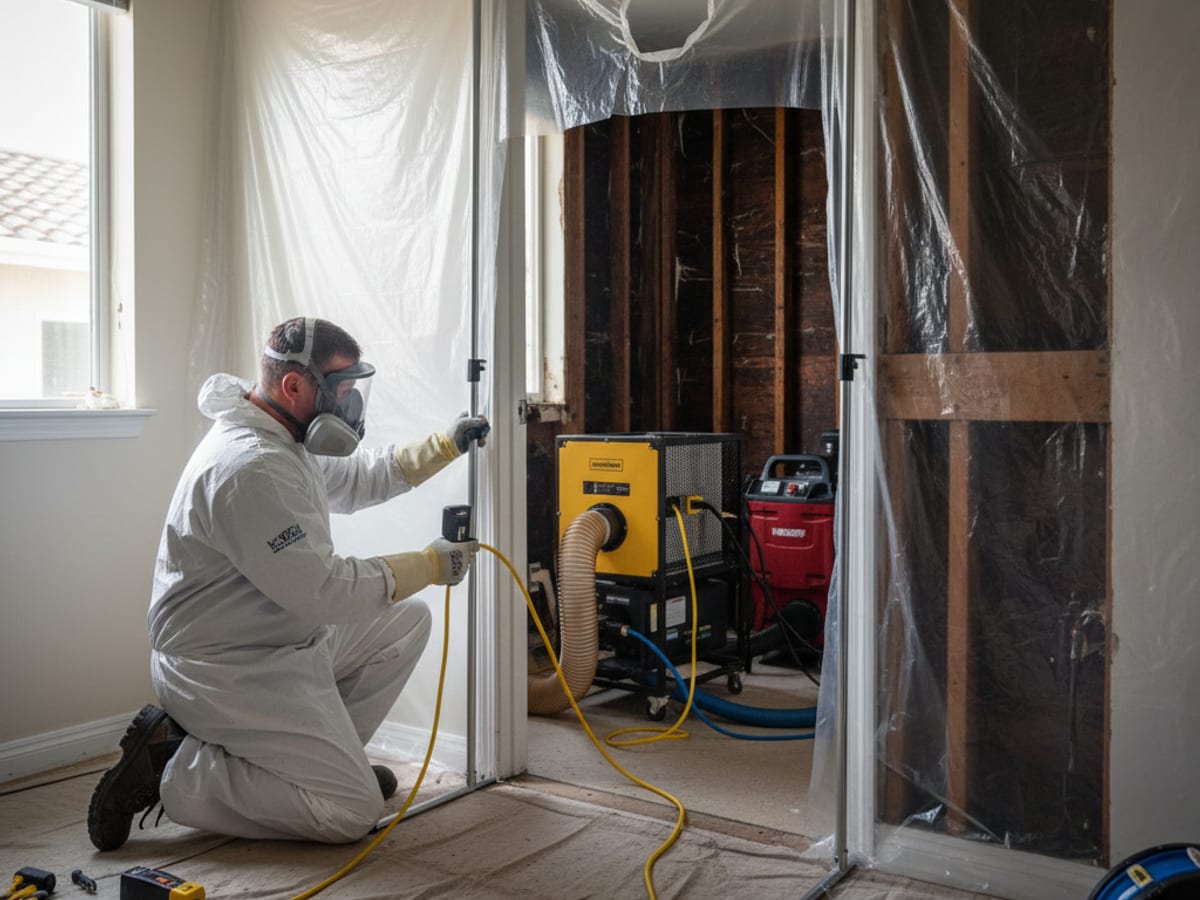
What musty smell means in La Presa
In La Presa, musty smell is a moisture problem first and a cosmetic issue second. La Presa water damage is shaped by the area's 1970s-80s tract development character and its position adjacent to Spring Valley. That local housing mix shapes where we look first when this symptom shows up.
Why musty smell shows up in La Presa
Musty odor complaints in El Cajon, Santee, and Lakeside usually mean hidden damp material, not a dirty vent. With slab-on-grade tracts and canyon-adjacent homes, cavities and crawlspaces hide the source while dry air that helps drying once the source is stopped keeps odor stronger.
- Common local pattern: slab leaks year-round and roof or runoff events in wet weeks
- Housing context: slab-on-grade tracts and canyon-adjacent homes
- Climate factor: dry air that helps drying once the source is stopped
- Neighborhoods and cities in play: El Cajon, Santee, and Lakeside
- Related restoration path: mold remediation after moisture mapping
La Presa homes and what they need
Typical scope includes slab-leak restoration on 1970s-80s tract homes (leak detection, slab access, source repair, dry-out, reconstruction) and Cat 2 backup remediation on older cast-iron drain failures (containment, antimicrobial application, porous-material removal, dry-out, clearance testing).
Neighborhoods we cover for musty smell in La Presa: La Presa CDP, Spring Valley adjacent hillside, Sweetwater Reservoir area properties.
La Presa is Spring Valley-adjacent hillside, with 1970s-80s slab-on-grade tract stock now in the slab-leak window. Older cast-iron drain stacks across the area produce a steady volume of Cat 2 backup events that need full S500 protocol.
Common causes of musty smell
- Wet pad or subfloor under carpet that looks dry on top
- Wall cavity moisture from a slow supply pinhole
- Crawlspace or raised-foundation damp framing
- Wet insulation in a ceiling or exterior wall
- Prior loss that was mopped but never structurally dried
- Closet or cabinet base that stayed wet against an exterior wall
Ready for restoration help? See mold remediation in La Presa or the La Presa service area page.
La Presa musty smell questions
What usually causes musty smell in El Cajon homes?
In this part of the county the leading pattern is slab leaks year-round and roof or runoff events in wet weeks. We moisture-map first, confirm whether the source is still active, and only then open walls or remove finishes.
Is musty smell an emergency in the East County area?
A musty smell that will not air out usually means hidden wet material or early colonization behind a wall or under a floor. Locally, dry air that helps drying once the source is stopped means waiting often makes the footprint larger than the first stain or puddle suggests.
What should I do about musty smell in La Presa right now?
A musty smell that will not air out usually means hidden wet material or early colonization behind a wall or under a floor. In La Presa, we moisture-map on arrival, stop active sources when we can, and start extraction or containment the same visit on active losses. Call (858) 400-4586.
Do you handle musty smell across East County San Diego?
Yes. Musty odor complaints in El Cajon, Santee, and Lakeside usually mean hidden damp material, not a dirty vent. We serve La Presa and nearby East County communities with the same IICRC-based process.
Where we work in La Presa
Get help with musty smell in La Presa
Moisture mapping first. Mitigation when the loss is active.