
Last updated: April 23, 2026
Bubbling Paint in Oceanside, CA.
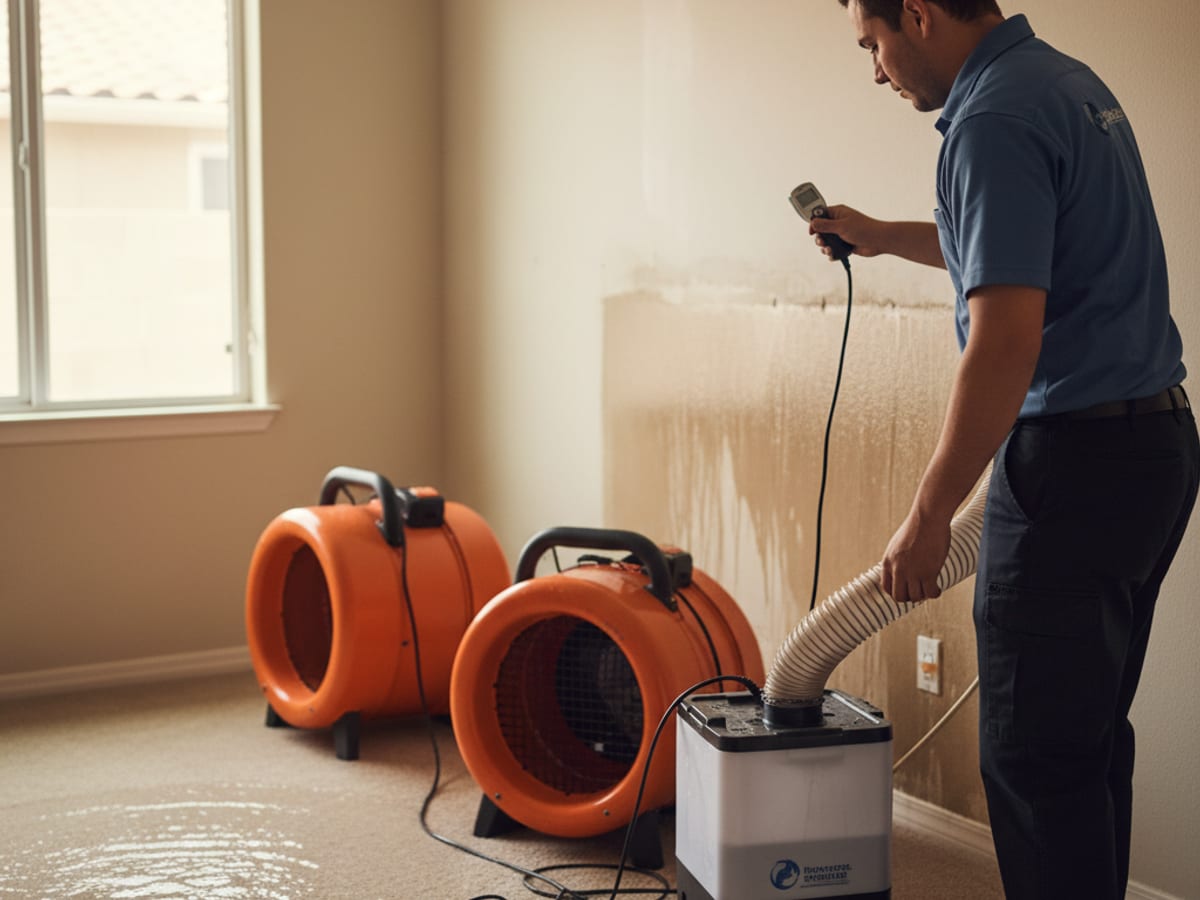
Bubbling or peeling paint on drywall is a moisture telegraph. The finish loses adhesion when the paper face stays damp, often from a hidden supply leak, roof intrusion, or shower pan failure..
What bubbling paint means in Oceanside
In Oceanside, bubbling paint is a moisture problem first and a cosmetic issue second. Oceanside water damage scope reflects the city's mixed inventory and its proximity to Camp Pendleton. That local housing mix shapes where we look first when this symptom shows up.
Why bubbling paint shows up in Oceanside
Bubbling paint in Oceanside, Carlsbad, and Encinitas is treated as active moisture until meters say otherwise. In a mix of older Encinitas and Oceanside stock and newer Carlsbad builds, copper failures in older homes and PEX or appliance failures in newer ones, and coastal humidity on beach blocks, milder just inland can keep the paper face damp after the surface looks dry.
- Common local pattern: copper failures in older homes and PEX or appliance failures in newer ones
- Housing context: a mix of older Encinitas and Oceanside stock and newer Carlsbad builds
- Climate factor: coastal humidity on beach blocks, milder just inland
- Neighborhoods and cities in play: Oceanside, Carlsbad, and Encinitas
- Related restoration path: water damage restoration after moisture mapping
Oceanside homes and what they need
Beach-block work concentrates on identifying salt-corroded source failures, meter-side emergency shut-off coordination when local valves have seized, and the persistent marine-humidity-driven mold remediation that beach-block stock generates over time.
Neighborhoods we cover for bubbling paint in Oceanside: Beach blocks (The Strand area), South Oceanside, San Luis Rey, Rancho Del Oro, Mira Costa adjacency, Mission Avenue corridor, Coast Highway corridor, Fire Mountain.
Oceanside spans older 1940s-70s beach stock taking direct salt-air exposure, the South O bungalow inventory, and newer master-plan tract in San Luis Rey and Rancho Del Oro. Beach-block salt-corroded shutoffs drive emergency-response complexity; inland tract slab leaks and Cat 2 backups dominate the residential-volume mix. Marine-base PCS turnover adds a steady stream of move-in and move-out water damage discovery work.
Common causes of bubbling paint
- In-wall supply pinhole wetting the paper face
- Shower or tub leak migrating into an adjacent room
- Roof or flashing leak above a top-floor wall
- Condensation in a cold exterior wall cavity
- Prior flood that wicked into baseboards and lower drywall
- Failed vapor control in a bathroom wet wall
Ready for restoration help? See water damage in Oceanside or the Oceanside service area page.
Oceanside bubbling paint questions
What usually causes bubbling paint in Oceanside homes?
In this part of the county the leading pattern is copper failures in older homes and PEX or appliance failures in newer ones. We moisture-map first, confirm whether the source is still active, and only then open walls or remove finishes.
Is bubbling paint an emergency in the North Coastal area?
Bubbling paint means moisture is moving through the finish now. Soft drywall behind it needs moisture mapping before patch work. Locally, coastal humidity on beach blocks, milder just inland means waiting often makes the footprint larger than the first stain or puddle suggests.
What should I do about bubbling paint in Oceanside right now?
Bubbling paint means moisture is moving through the finish now. Soft drywall behind it needs moisture mapping before patch work. In Oceanside, we moisture-map on arrival, stop active sources when we can, and start extraction or containment the same visit on active losses. Call (858) 400-4586.
Do you handle bubbling paint across North Coastal San Diego?
Yes. Bubbling paint in Oceanside, Carlsbad, and Encinitas is treated as active moisture until meters say otherwise. We serve Oceanside and nearby North Coastal communities with the same IICRC-based process.
Where we work in Oceanside
Get help with bubbling paint in Oceanside
Moisture mapping first. Mitigation when the loss is active.