
Last updated: April 23, 2026
Emergency Water Removal in Imperial Beach, CA.
Emergency water removal is the first hour of an active loss: stop the source, pull standing water, and start air movement before finishes and cavities stay wet overnight..
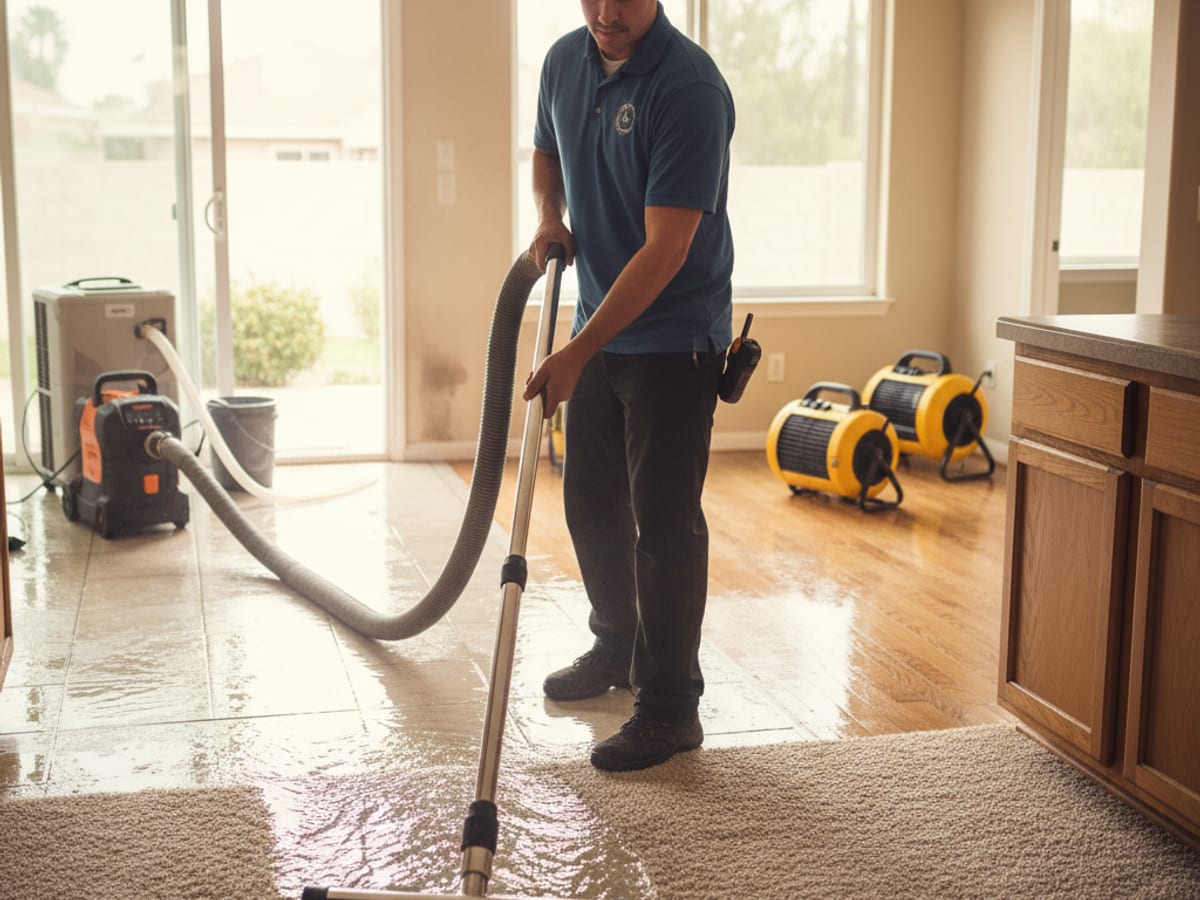
How emergency water removal works in Imperial Beach
In Imperial Beach, emergency water removal is a specialized restoration scenario, not a generic service page. Imperial Beach water damage scope reflects the city's coastal exposure and its mix of older single-family and dense multi-family inventory. That local housing mix shapes where we look first for this scenario.
Why emergency water removal shows up in Imperial Beach
Emergency water removal calls around Coronado, PB, OB, and Point Loma often start with seized shutoffs and longer soaks before mitigation starts. In older beach bungalows and salt-air housing stock, response time and hose access matter first, and marine-layer humidity that slows drying makes delayed extraction more expensive.
- Local pattern: seized shutoffs and longer soaks before mitigation starts
- Housing stock: older beach bungalows and salt-air housing stock
- Climate factor: marine-layer humidity that slows drying
- Cities in this region pattern: Coronado, PB, OB, and Point Loma
- Related service path: emergency water extraction
Imperial Beach homes and what they need
For beach-block single-family losses, the work concentrates on identifying salt-corroded source failures (a shutoff dripping behind a sink, a fitting failing inside a wall, a hose bib slowly leaking under the house), mitigating the structural damage, coordinating with a plumber on the source repair, and running mold remediation when persistent moisture has fed colonization.
Neighborhoods we cover for emergency water removal in Imperial Beach: Beach blocks (west of Seacoast Drive), Palm Avenue corridor, 13th Street area, Imperial Beach Pier area, East IB residential.
Imperial Beach beach-block stock takes the most direct salt-air corrosion of any South Bay city, with older 1950s-70s single-family on aging galvanized supply plus a dense multi-family inventory along Palm Avenue and 13th Street. Hidden slow leaks and Cat 2 backup events dominate the call mix.
What emergency water removal usually involves
- Active supply break still adding volume
- Appliance discharge that looks shallow but soaks a wide pad area
- After-hours response when shutoffs fail
- Truck-mount extraction versus portable units by access
- Category assessment before anyone mops contaminated water
- Immediate transition into structural drying equipment
Ready for restoration help? See water extraction in Imperial Beach or the Imperial Beach service area page.
Imperial Beach emergency water removal questions
How do you handle emergency water removal in Coronado?
We start with moisture mapping and category assessment, then mitigation matched to the loss. In this region that often means accounting for seized shutoffs and longer soaks before mitigation starts inside older beach bungalows and salt-air housing stock.
Is emergency water removal urgent in the Coastal area?
Standing water spreads into walls while you wait. Shut the source off if you can and call for same-visit extraction. Locally, marine-layer humidity that slows drying means delays usually widen the footprint.
What should I do about emergency water removal in Imperial Beach right now?
Standing water spreads into walls while you wait. Shut the source off if you can and call for same-visit extraction. In Imperial Beach, the scope starts with moisture mapping and source review. Those findings determine whether extraction, containment, or structural drying is needed. Call (858) 400-4586.
Do you handle emergency water removal across Coastal San Diego?
Yes. Emergency water removal calls around Coronado, PB, OB, and Point Loma often start with seized shutoffs and longer soaks before mitigation starts. We serve Imperial Beach and nearby Coastal communities with the same IICRC-based process.
Where we work in Imperial Beach
Get help with emergency water removal in Imperial Beach
Moisture mapping first. Mitigation when the loss is active.