
Last updated: April 23, 2026
Emergency Water Removal in Harbison Canyon, CA.
Emergency water removal is the first hour of an active loss: stop the source, pull standing water, and start air movement before finishes and cavities stay wet overnight..
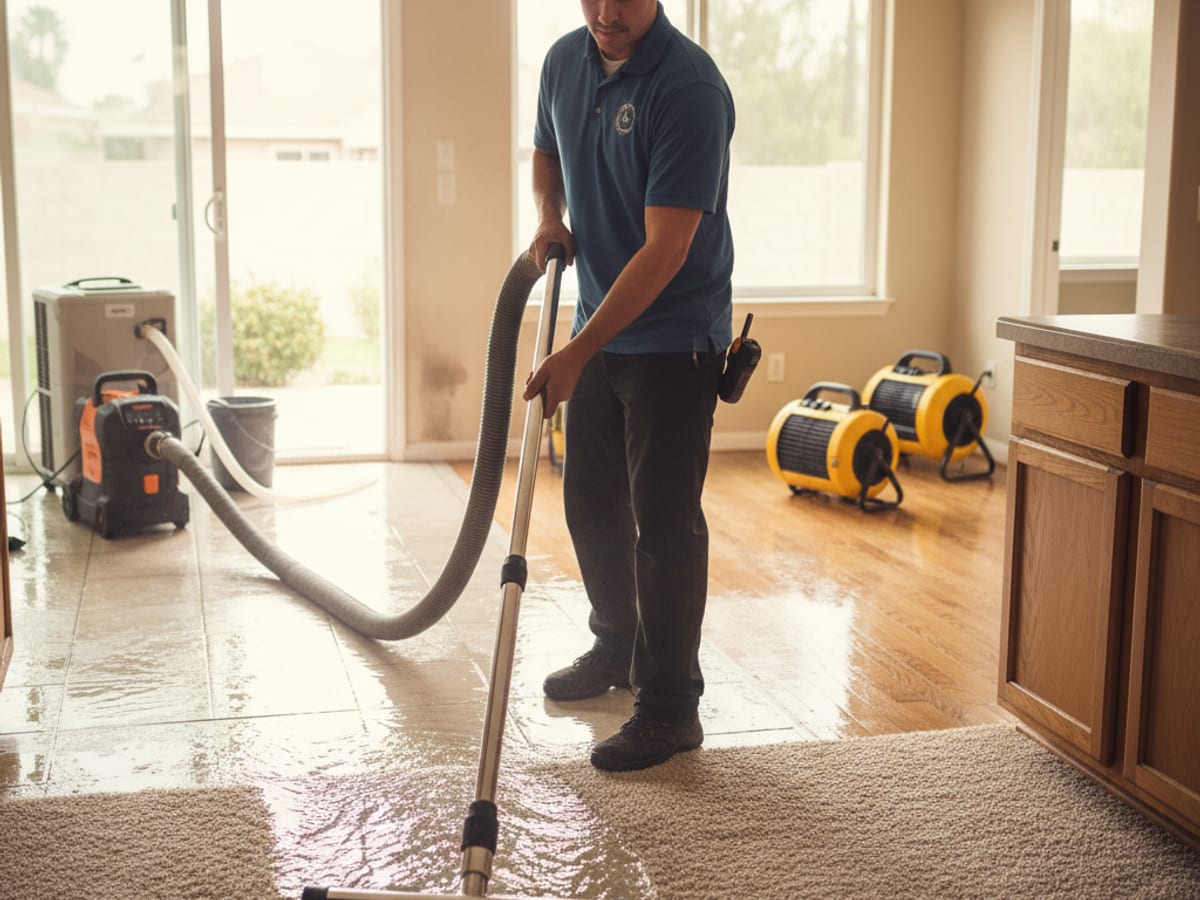
How emergency water removal works in Harbison Canyon
In Harbison Canyon, emergency water removal is a specialized restoration scenario, not a generic service page. Harbison Canyon water damage scope is shaped by the canyon's rural-residential character and its post-Cedar Fire rebuild history. That local housing mix shapes where we look first for this scenario.
Why emergency water removal shows up in Harbison Canyon
Emergency water removal calls around Alpine, Julian, and Mt. Laguna often start with freeze-burst pipes, snowmelt intrusion, and septic events. In mountain cabins and rural homes with crawlspaces and septic, response time and hose access matter first, and cooler temperatures that slow dry-out makes delayed extraction more expensive.
- Local pattern: freeze-burst pipes, snowmelt intrusion, and septic events
- Housing stock: mountain cabins and rural homes with crawlspaces and septic
- Climate factor: cooler temperatures that slow dry-out
- Cities in this region pattern: Alpine, Julian, and Mt. Laguna
- Related service path: emergency water extraction
Harbison Canyon homes and what they need
For pipe-burst and supply-line emergencies, the work runs the standard response sequence, fast extraction, mitigation, dry-out, mold remediation when needed, reconstruction.
Neighborhoods we cover for emergency water removal in Harbison Canyon: Harbison Canyon proper, Canyon access road properties, El Cajon-Alpine corridor parcels.
Harbison Canyon is in the extreme fire-risk zone between El Cajon and Alpine, post-Cedar Fire rebuilds added a generation of newer plumbing systems, and winter freeze events occasionally produce pipe-burst emergencies. Septic-system overflow during major storms is a recurring call type on the rural-residential parcels.
What emergency water removal usually involves
- Active supply break still adding volume
- Appliance discharge that looks shallow but soaks a wide pad area
- After-hours response when shutoffs fail
- Truck-mount extraction versus portable units by access
- Category assessment before anyone mops contaminated water
- Immediate transition into structural drying equipment
Ready for restoration help? See water extraction in Harbison Canyon or the Harbison Canyon service area page.
Harbison Canyon emergency water removal questions
How do you handle emergency water removal in Alpine?
We start with moisture mapping and category assessment, then mitigation matched to the loss. In this region that often means accounting for freeze-burst pipes, snowmelt intrusion, and septic events inside mountain cabins and rural homes with crawlspaces and septic.
Is emergency water removal urgent in the Backcountry area?
Standing water spreads into walls while you wait. Shut the source off if you can and call for same-visit extraction. Locally, cooler temperatures that slow dry-out means delays usually widen the footprint.
What should I do about emergency water removal in Harbison Canyon right now?
Standing water spreads into walls while you wait. Shut the source off if you can and call for same-visit extraction. In Harbison Canyon, the scope starts with moisture mapping and source review. Those findings determine whether extraction, containment, or structural drying is needed. Call (858) 400-4586.
Do you handle emergency water removal across Backcountry San Diego?
Yes. Emergency water removal calls around Alpine, Julian, and Mt. We serve Harbison Canyon and nearby Backcountry communities with the same IICRC-based process.
Where we work in Harbison Canyon
Get help with emergency water removal in Harbison Canyon
Moisture mapping first. Mitigation when the loss is active.