
Last updated: April 23, 2026
Category 3 Water Damage in Rancho San Diego, CA.
Category 3 black water includes sewage, rising flood water from outdoors, and other grossly contaminated sources. Porous materials that absorbed it are usually disposed, not cleaned in place..
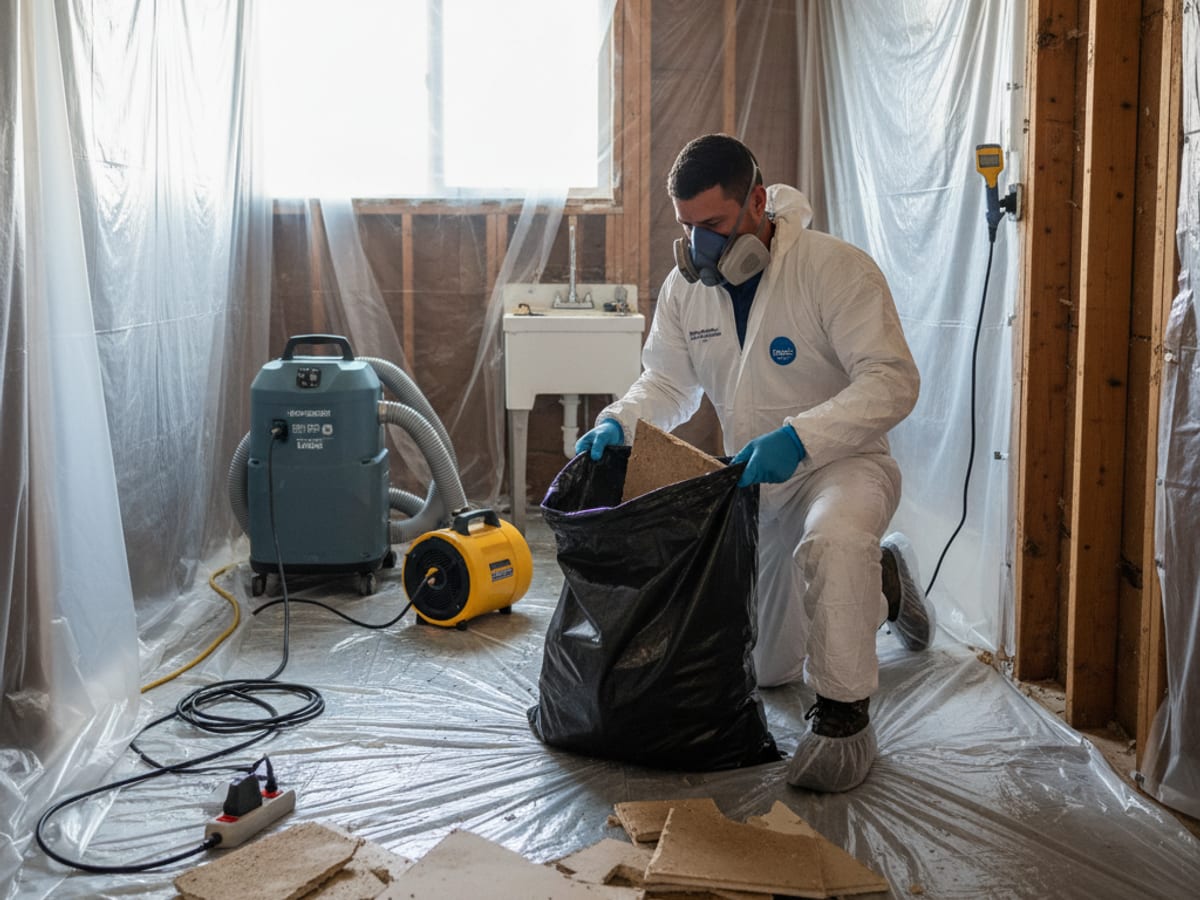
How category 3 water damage works in Rancho San Diego
In Rancho San Diego, category 3 water damage is a specialized restoration scenario, not a generic service page. Rancho San Diego water damage is shaped by the area's SR-94 corridor topography and the 1980s-90s master-plan development. That local housing mix shapes where we look first for this scenario.
Why category 3 water damage shows up in Rancho San Diego
Category 3 work around El Cajon, Santee, and Lakeside includes sewage and outdoor water tied to slab leaks year-round and roof or runoff events in wet weeks. In slab-on-grade tracts and canyon-adjacent homes, porous disposal volume rises quickly, and dry air that helps drying once the source is stopped stretches the dry-out after sanitizing.
- Local pattern: slab leaks year-round and roof or runoff events in wet weeks
- Housing stock: slab-on-grade tracts and canyon-adjacent homes
- Climate factor: dry air that helps drying once the source is stopped
- Cities in this region pattern: El Cajon, Santee, and Lakeside
- Related service path: sewage cleanup
Rancho San Diego homes and what they need
Typical scope is slab-leak restoration, leak detection with plumber partner, concrete saw-cutting for slab access, source repair, slab and framing dry-out, mold remediation when needed, and reconstruction.
Neighborhoods we cover for category 3 water damage in Rancho San Diego: Cuyamaca College area, Hillsdale Road tracts, Jamacha Boulevard corridor, Rancho San Diego Boulevard area.
Rancho San Diego is SR-94 corridor hillside residential, 1980s-90s master-plan tract stock with under-slab copper now entering the prime slab-leak window. Hillside foundation drainage issues add a seasonal winter-storm water-damage pattern on the steeper lots.
What category 3 water damage usually involves
- Sewage backups and septic overflows
- Outdoor flood and street water intrusion
- Porous flooring and drywall disposal rules
- Full PPE and negative-air containment
- Antimicrobial treatment after removal
- Clearance expectations on larger losses
Ready for restoration help? See sewage cleanup in Rancho San Diego or the Rancho San Diego service area page.
Rancho San Diego category 3 water damage questions
How do you handle category 3 water damage in El Cajon?
We start with moisture mapping and category assessment, then mitigation matched to the loss. In this region that often means accounting for slab leaks year-round and roof or runoff events in wet weeks inside slab-on-grade tracts and canyon-adjacent homes.
Is category 3 water damage urgent in the East County area?
Black water is a biohazard response. Keep people and pets out of the area and call for Cat 3 protocol. Locally, dry air that helps drying once the source is stopped means delays usually widen the footprint.
What should I do about category 3 water damage in Rancho San Diego right now?
Black water is a biohazard response. Keep people and pets out of the area and call for Cat 3 protocol. In Rancho San Diego, the scope starts with moisture mapping and source review. Those findings determine whether extraction, containment, or structural drying is needed. Call (858) 400-4586.
Do you handle category 3 water damage across East County San Diego?
Yes. Category 3 work around El Cajon, Santee, and Lakeside includes sewage and outdoor water tied to slab leaks year-round and roof or runoff events in wet weeks. We serve Rancho San Diego and nearby East County communities with the same IICRC-based process.
Where we work in Rancho San Diego
Get help with category 3 water damage in Rancho San Diego
Moisture mapping first. Mitigation when the loss is active.