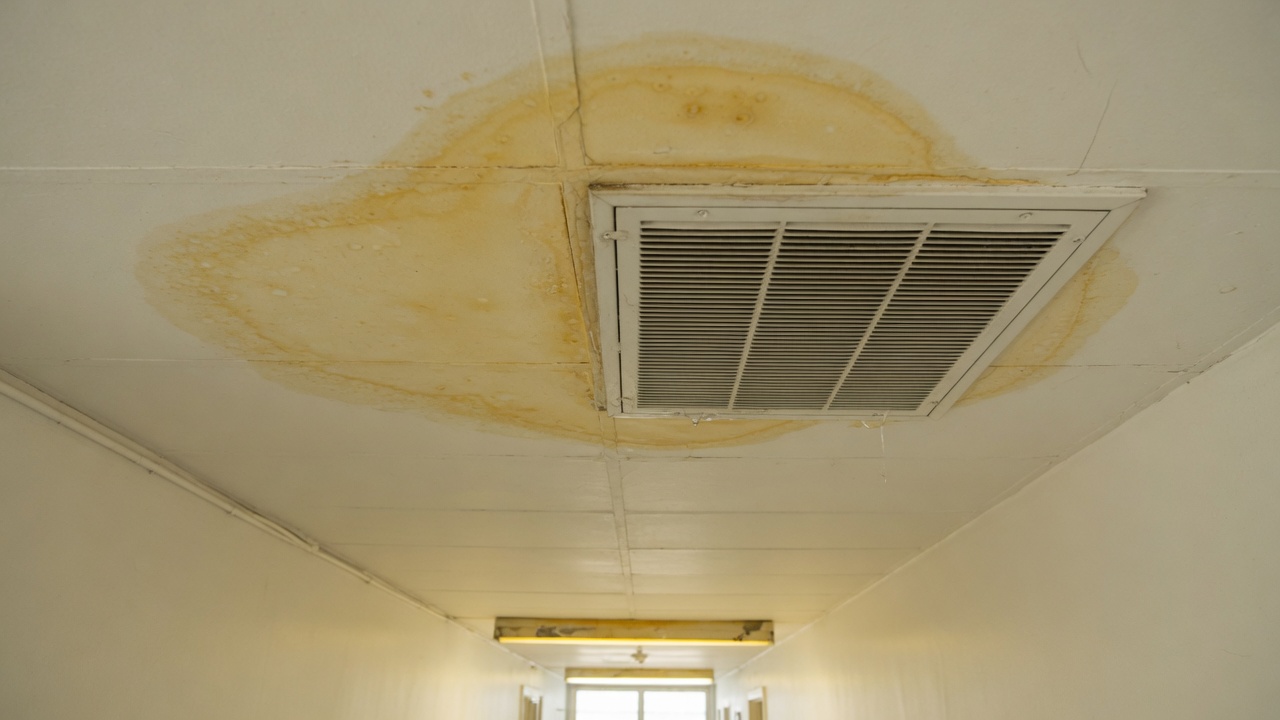
Water at a ceiling or wall vent usually means condensate or a leak has a path through the duct, or through the drywall around it. An HVAC tech finds the mechanical source. A licensed restoration pro handles the wet drywall, insulation, and rooms the water already reached.
That is different from a puddle at the mechanical closet. Water leaking from an air vent shows up at a supply register or a return grille in a living space. Restore Pro SD is a referral service. We match you with independent licensed restoration professionals. We do not clear condensate drains, and we do not send a brand HVAC tech.
Sort a vent drip from a closet overflow
A clogged drain that dumps in the indoor-unit closet is a different job from a drip at a bedroom register. The closet overflow is covered on our AC condensate line water damage page. Check that closet anyway. In a Mission Valley condo the indoor unit often sits in a hallway closet. Overflow there can wet the platform, the drywall, and the nearest return. That is still a closet leak, even if a grille is close.
A ceiling supply in a Clairemont ranch is a different picture. The water has traveled. It may have run inside the duct, dripped onto the duct in the attic, or soaked the cavity around the boot. Photograph the closet pan, the vent, and the floor under each from dry ground. Don’t stand in water to do it. If a lamp, power strip, or outlet sits in the wet zone, leave it. CDC guidance is to shut the main breaker only when you can reach it without walking through water. Otherwise call an electrician. Never switch power on or off while standing in water.
If the closet is dry and a far register is dripping, the path is the duct or the attic above that room. If both are wet, the drain may have overflowed at the indoor unit and also pushed water into the supply. HVAC sorts the equipment. Restoration maps the rooms.
Condensate in the duct versus sweat on the duct
When people say ac duct leaking water, they usually mean one of two things.
The first is condensate backup that travels through the ducts. The coil makes water while the system cools. That water should leave through a drain. If the line is clogged, the pan can overflow. Some of that water can enter the supply plenum and run downhill to a register. You get a drip at a ceiling boot in a Mira Mesa hallway while the unit is still trying to cool. A homeowner may ask an HVAC tech about that drain. Restore Pro SD does not clear drains, and we do not tell you to pour vinegar into one.
The second is sweat on the outside of the duct. Cold supply air in a poorly insulated run meets attic air. Water beads on sheet metal or soaks a flex jacket, then finds the low point at the register. Inland tracts in El Cajon, Santee, Escondido, and Poway heat hard in summer. Coastal attics in Pacific Beach, Encinitas, and Imperial Beach sit in marine layer. They stay cooler, and the air around the duct can stay damp. Both climates can wet a duct. The heat load is not the same.
Sweat often shows after the AC has been running hard. Backup often shows as a real drip or a small stream at one grille. Those are clues for the HVAC tech, not a DIY drain job.
When a roof or pipe is using the duct as a path
Not every drip at a register is an AC problem. A roof leak can hit a duct in the attic and ride it to the nearest grille. That can look like the system failed when the rain is the source. If the vent drips during a storm with the AC off, the roof is in play before the coil is.
An attic water heater, a supply line, or an upstairs bath can do the same thing. Water lands on the duct, soaks the jacket, and shows up at the boot. A two-story in Chula Vista or Carlsbad can hide that path above a first-floor register.
Ask when it started. Cooling season with no rain points at condensate or sweat. A wet week in January with the heat on points at the roof or a pipe. A stain that grows with the system off is not a drain issue. A single bedroom boot often means a local attic hit. Several supplies along one trunk can mean water inside the run.
Don’t walk the attic looking for the leak if you don’t know the joists. That is how a wet ceiling becomes a hole. A roofer, a plumber, or an HVAC tech works the source. The restoration pro works the wet cavity after the source is identified.
HVAC for the source, restoration for the wet rooms
Two trades, not one. The mechanical source is HVAC work: the drain, the pan, the coil, missing duct insulation, or a disconnected run. Restore Pro SD does not dispatch HVAC techs. You call that trade for the equipment.
The wet building is restoration work. Water that left the duct has usually reached drywall, insulation, and sometimes carpet or furniture below. That is ceiling water damage and water damage restoration, not a filter change.
Ask the HVAC tech whether the drain is open, whether the pan overflowed into the plenum, and whether the run over that room is insulated. Ask the independent restoration pro how they will dry the ceiling cavity, what insulation they expect to remove, and which nearby dry material they will use as a baseline.
If you know or suspect the HVAC system is contaminated with mold, EPA mold cleanup guidance is not to run it. Running it can spread mold through the building. Consult EPA’s duct-cleaning guidance before anyone turns the system back on. Visible growth on a grille or in the boot is a reason to stop the fan, not a DIY scrub.
You contract with the licensed contractors, not with Restore Pro SD. Check a California license on the CSLB license lookup before work starts.
Dry the ceiling, insulation, and rooms the water reached
The drip at the grille is the part you can see. The ceiling cavity around the boot is the part that stays wet. Insulation above a Clairemont hallway, the drywall paper around a return in an Otay Ranch great room, and the carpet under a living-room supply all hold water after the register looks dry.
EPA guidance is to fix plumbing leaks and other water problems as soon as possible and dry items completely. If sewage or other contaminated water caused the damage, call a professional experienced with that work. A roof leak into a duct still has to come out of the building. Wiping the grille does not finish that.
The independent restoration pro should check past the stain: the ceiling around the vent, the wall if it is a return, the floor below, and rooms that share the run. They decide what drywall can dry and what has to come out. Restore Pro SD does not publish a cut height or a drying-day clock. Don’t paint a stained ceiling to close the job. EPA says not to paint or caulk moldy surfaces. Clean up the mold and dry the surfaces before painting.
A bowing ceiling is not a wipe-down. Move out from under it. The cavity can hold water after the drip looks small. Insurers later ask what was wet. You want photos of the vent, the closet, and the floor while the water is still showing.
If the water came from a roof or a pipe, that trade has to stop the source before the ceiling is closed.
When to call us
Call when a supply or return is dripping and the ceiling, insulation, or rooms below are wet, or when you suspect the system itself is contaminated. Stay out of standing water. An HVAC tech stops the mechanical source. A licensed restoration contractor dries the building. Call us at (858) 400-4586 and we’ll connect you with a licensed local restoration pro. The line takes a recorded message. You get a call back. You contract with that professional.