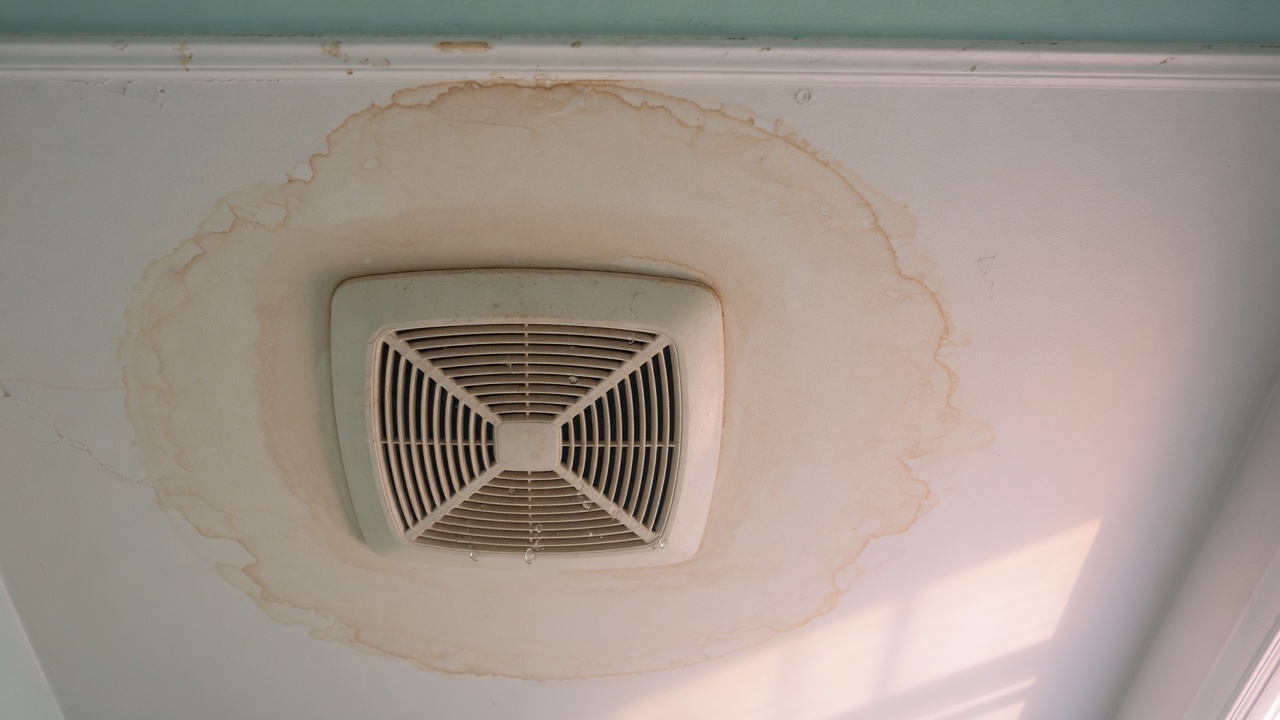
Water dripping from the bathroom fan only during or after a hot shower, with no rain, is often condensation in a cold attic duct. Dripping during rain with nobody showering is more likely a failed roof cap, failed flashing, or a nearby roof leak. Either way, wet drywall and insulation around the fan is a restoration question after the source is stopped.
The fan is also live electrical equipment. Do not stand in water to flip the switch or unscrew the grille. CDC electrical guidance is to shut the main breaker only when you can reach it without walking through water. Otherwise call an electrician.
Restore Pro SD is a referral service. We match you with a licensed independent restoration professional. We do not patch roofs, rewire fans, or dry ceilings ourselves. You contract with that professional.
Time the drip before anyone opens the ceiling
A Clairemont ranch hall bath and a two-story Otay Ranch bathroom can show the same wet grille and still have different sources. Time the drip before anyone cuts drywall.
If it drips only during or right after a hot shower, and the sky is dry, start with condensation in the duct. Steam hits a cold run of flex duct in the attic, beads, and runs back to the grille.
If it drips during rain, and nobody has showered, start with the roof: the cap, the flashing around that cap, or tiles next to the penetration.
If it does both, you may have two problems, or a roof leak that shows more when the fan is pulling. That is not a reason to climb a tile roof.
If it drips when a toilet flushes, a tub fills, or an upstairs shower runs, think plumbing near the fan opening.
If it drips on a dry day with no one using water, it can still be a slow roof leak, an attic supply line, or a duct that condenses whenever the bathroom is humid.
A Mission Valley condo adds a building split. The roof cap often sits on a shared roof. The wet ceiling is still inside the unit. The HOA may need the roofer. The cavity drying is still a restoration job.
Photograph the grille, the stain ring, and any sagging. Stay out from under a ceiling that is bowing.
Condensation in a cold attic duct
San Diego attics are not one climate. A Mira Mesa or Scripps Ranch production house can have a long flex duct across an unconditioned attic. East County attics in El Cajon and Escondido swing from a cold night to a hot afternoon. A morning shower into that cold duct makes water. Coastal houses in Pacific Beach, Ocean Beach, and Encinitas sit under marine layer. The attic stays cool while the shower is hot.
If the duct is uninsulated, disconnected, or sagging, the water never makes it out the roof cap. A low spot in flex duct holds condensate and dumps it back through the fan.
You won’t see that from the bathroom. The independent restoration pro, or a trade they coordinate with, looks at the attic side: wet batts around the housing, rust, a duct slipped off the collar, or a run that dips between joists.
Do not pull the fan to check the duct if the housing is wet. That is live equipment until an electrician says otherwise.
EPA mold guidance is to fix water problems as soon as possible and dry items completely. Condensate that has already soaked the drywall around the fan is not a wipe-the-grille job.
This is not an AC condensate overflow at the indoor cooling unit. That drip shows at a mechanical closet, an attic platform, or a condensate pan, not at the bathroom exhaust grille.
Rain at the roof cap, flashing, or nearby roof
The roof cap is the small hood that terminates the exhaust on the roof. If it is missing, cracked, or rusted through, rain can enter the duct and land on the fan. Salt air along Imperial Beach, Pacific Beach, and Carlsbad is hard on metal caps.
Flashing is the weather seal around the penetration. On a tile roof in Encinitas, La Jolla, or Carlsbad, that detail is a common leak path. Water then follows the duct or a joist and shows up at the fan because the fan is a hole in the ceiling.
A leak one or two tiles over can do the same thing. The fan is not the source. It is the nearest opening. A roof leak is two trades. A roofer stops weather from entering. A restoration professional assesses the wet insulation and ceiling below. Restore Pro SD does not patch roofs.
Do not walk a tile roof to look at the cap. From the ground you might see a missing cap on a single-story ranch. That still does not tell you whether flashing failed under the tiles.
A brown ring around the grille after a storm is a ceiling water stain. Painting it before the roof is tight is how it comes back.
If rain is actively dripping from the fan, move out from under it. Set a bucket from dry floor if you can reach it without standing in water.
Plumbing that found the fan opening
The fan cutout is a rectangle in the drywall. Water from a nearby leak will use it.
On a two-story house in Chula Vista or San Marcos, a first-floor bath fan can sit under a second-floor shower valve, toilet supply, or tub. The drip then follows the upstairs fixture, not the weather and not this bathroom’s steam.
On a single-story North Park bungalow, an attic supply line or a bathroom valve in the wall can wet the same housing.
If the drip lines up with plumbing use, a plumber stops the source. The restoration pro still has to map the cavity.
If the water may be sewage or another contaminated source, stop handling it. The EPA’s same mold guidance says to call a professional experienced with contaminated-water damage.
Who covers what, and what to ask about the cavity
Split the job or one trade will guess at another trade’s work.
An electrician makes the wet fan and the wet circuit safe. That is first if water is on the motor, the switch, or the wiring.
A roofer owns the cap, the flashing, and the roof around the penetration when rain is the source. They do not dry the ceiling cavity.
A plumber owns a supply, drain, or shower leak when the drip follows fixtures, not weather or steam.
The independent restoration professional owns the wet building materials: drywall around the housing, insulation in the bay, adjacent texture, and the wall below if water ran down. Ceiling water damage is that cavity work after the source is stopped.
Restore Pro SD matches you with the restoration professional. We do not send a brand electrician, roofer, or plumber. Ask the matched pro whether another trade has to finish first. Check a California license on the CSLB license lookup before work starts.
Ask them these questions about the ceiling, not about a ladder on the roof:
- How they will map moisture past the visible stain, including insulation above the fan.
- What nearby dry drywall they will use as a baseline.
- Which materials they expect to dry versus cut out around the housing.
- Whether they will look at the attic side of the fan once the circuit is safe.
- How they will confirm the leak is actually stopped before the ceiling is closed.
- How they will handle an older textured ceiling before anyone opens a large area. Restore Pro SD does not perform abatement.
Do not paint, caulk, or texture over a still-wet ring. EPA guidance is to dry items completely. You contract with the licensed contractor, not with Restore Pro SD. Insurance, if you have it, is a question for your carrier.
When to call us
Call when water is dripping from the bathroom exhaust fan and you cannot tell condensation from a roof leak from a plumbing leak, or when the drywall around the fan is already wet. Stay out of standing water. Leave a wet fan to an electrician. The line takes a recorded message. You get a call back. Call us at (858) 400-4586 and we’ll connect you with a licensed local restoration pro.